Since late June 2025, cannabis flowers in Thailand are sold only on prescription. What this means for travellers, the penalties and what is still allowed.
Please note: Rules can change – check the official source before you travel. This guide reflects the rules as stated on 27 August 2025 and is for information only, not legal advice.
Is cannabis still legal for tourists in Thailand?
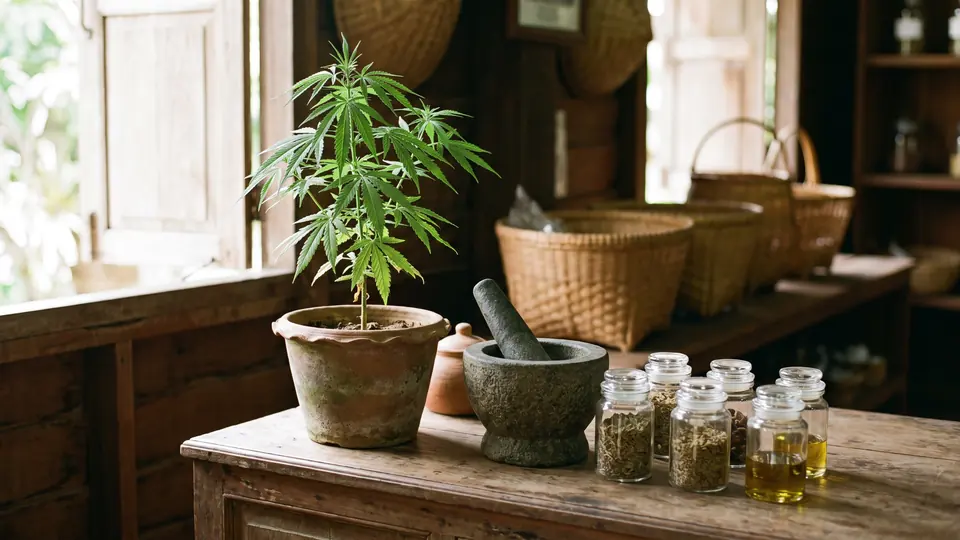
No, not for leisure use. As stated when this article was published on 27 August 2025, cannabis flowers were reclassified as a controlled herb in late June 2025 and may only be sold with a doctor's prescription, for a maximum of 30 days per prescription. Advertising, online sales and vending machines are banned, and the government was considering putting cannabis back on the narcotics list.
What are the key rules?
The new rules focus on sales. Shops may sell only to patients with a valid prescription, every sale is recorded, and many former recreational stores are switching to medical dispensing, so there are fewer recreational shops and more medical outlets. The rules took effect on publication in the Royal Gazette. The figures below are as stated when this article was published.
- Reclassification: since late June 2025, cannabis flowers are treated as a controlled herb; sales are for medical use only and strictly recorded.
- Prescription: issued by a doctor, including practitioners of traditional Thai or Chinese medicine, for a maximum of 30 days.
- Sales without a prescription basis: up to 1 year in prison or a fine of up to 20,000 baht.
- Advertising, online sales and vending machines are prohibited.
- Smoking in public: treated as a public nuisance under health law, with fines of up to 25,000 baht and/or up to 3 months in prison.
- Outlook: the authorities were weighing a full return to the narcotics list.
What does this mean for travellers?
Without a prescription there is no legal way to buy cannabis flowers, and smoking on the beach or in the street can be prosecuted. If cannabis has been prescribed for you, use it only in private and keep your prescription with you. Do not carry cannabis or cannabis products across borders, and never drive after consumption, because driving under the influence of drugs is illegal.
- Buying without a prescription: not allowed.
- Smoking on the beach or in the street: can be prosecuted as a nuisance offence.
- CBD: extracts with up to 0.2% THC remained generally permitted; keep labels and receipts. Flowers are prescription-only.
- Import and export: tightly regulated; do not take cannabis or cannabis products across borders.
- Driving: never drive after consumption.
How do residents and long-stay visitors access medical cannabis?
Medical cannabis is only available through a proper medical process. A doctor, including practitioners of traditional Thai medicine, makes a diagnosis and issues a prescription with the exact quantity and duration, for a maximum of 30 days. You then buy from a licensed medical dispensary, where the transaction is recorded. Carry your prescription or a copy and avoid any public use.
- Visit a doctor for a diagnosis and medical indication.
- Get a prescription stating the exact quantity and duration (maximum 30 days).
- Buy only from a licensed medical dispensary.
- Carry the prescription (photo or copy) and do not use cannabis in public.
Is possession without a prescription a crime?
The new rules mainly target retail sales rather than mere possession. However, without proof of a legal purchase, and especially if you use cannabis in public, your risk increases. Some outlets were reported to work with nearby clinics to arrange quick prescriptions; this is legally risky, because only a genuine medical indication counts. The safest choice for travellers is not to take the chance.
Will cannabis become fully illegal again?
When this article was published, the government was considering returning cannabis to the narcotics list, and further steps were possible. Shops selling without a prescription basis already faced up to 1 year in prison or a 20,000 baht fine, plus possible licence revocation and further sanctions. Rules can change quickly, so check official sources such as the Tourism Authority of Thailand before you travel.